Volume: 14 Issue: 2
Awareness, Attitudes, and Barriers toward Millet Consumption and Its Role in Prevention and Control of Noncommunicable Diseases among Urban Adults in Hyderabad, India
Year: 2026, Page: 20-26, Doi: https://doi.org/10.47799/pimr.1402.26.10
Received: June 30, 2026 Accepted: July 17, 2026 Published: Aug. 4, 2026
Abstract
Background: Non-communicable diseases (NCDs) such as diabetes, hypertension, cardiovascular disease, hypercholesterolemia, and cancer are major causes of morbidity and mortality in India, particularly in urban populations. The shift from traditional cereals to refined grains has contributed to unhealthy dietary patterns. Millets are nutrient-rich, low-glycaemic cereals with proven benefits in NCD prevention and management; however, their consumption remains limited despite national promotion initiatives. Objectives: To assess awareness regarding the health benefits of millets and their role in NCD prevention and control, assess attitudes toward millet consumption, and identify barriers to regular millet consumption. Methods: A community-based cross-sectional study was conducted among 110 adults aged ≥18 years residing in the urban field practice areas of Gandhi Medical College, Hyderabad. Results: Among participants, 28% reported having at least one NCD. Overall, 76% demonstrated good awareness regarding the nutritional and health benefits of millets. Knowledge of the role of millets in NCD prevention was good in 51.9%, moderate in 36.2%, and poor in 11.9%. However, 56% reported strong barriers to regular millet consumption. All participants believed millets are beneficial for health, while only 35.5% liked the taste of millet-based foods. Nevertheless, 80% expressed willingness to include millets in their regular diet. Conclusion: Despite high awareness and a positive attitude toward millet consumption, several barriers continue to limit regular intake. Improving nutrition education, accessibility, and supportive policies may promote millet consumption as a sustainable dietary strategy for NCD prevention and control.
Keywords: Millets, Noncommunicable diseases, Awareness, Barriers, Urban population, India
INTRODUCTION
Noncommunicable diseases (NCDs) are the leading cause of mortality worldwide, accounting for nearly 74% of all deaths globally[1]. The major NCDs include cardiovascular diseases, diabetes mellitus, chronic respiratory diseases, and cancers, all of which impose a substantial burden on healthcare systems and economies. The increasing prevalence of these conditions is largely driven by rapid urbanization, population ageing, sedentary lifestyles, unhealthy dietary practices, tobacco use, and harmful alcohol consumption. Among these risk factors, poor dietary habits have emerged as one of the most important modifiable determinants of NCDs, making nutrition-based interventions an essential component of disease prevention and health promotion.
India is undergoing a rapid epidemiological and nutritional transition, with NCDs now responsible for more than 60% of total mortality in the country[2]. Over the past few decades, improvements in life expectancy and socioeconomic development have been accompanied by profound changes in lifestyle and food consumption patterns. Urbanization has led to increased dependence on processed and convenience foods, reduced physical activity, and greater consumption of energy-dense diets rich in refined carbohydrates, saturated fats, sugar, and salt. These changes have accelerated the rise of obesity, diabetes, hypertension, and cardiovascular diseases, posing a significant public health challenge.
Among the various NCDs, diabetes mellitus, cardiovascular diseases, hypertension, and obesity are increasing rapidly in India, particularly among urban populations[3]. According to the National Family Health Survey (NFHS-6, 2023–24), the prevalence of high or very high blood sugar levels (or current use of medication to control blood sugar) was 21.9% among urban women and 23.9% among urban men aged 15 years and above, the prevalence of elevated blood pressure (systolic blood pressure ≥140 mmHg and/or diastolic blood pressure ≥90 mmHg, or current use of antihypertensive medication) was 23.5% among urban women and 26.2% among urban men aged 15 years and above[4]. Cardiovascular diseases account for approximately one-fourth of all deaths in the country and remain the leading cause of premature mortality. In parallel, the prevalence of overweight and obesity has increased substantially during the past two decades, especially in metropolitan cities where sedentary occupations and unhealthy dietary habits are more common. These conditions often coexist and share common behavioural and metabolic risk factors, thereby increasing the overall burden of chronic disease.
One of the major contributors to this growing epidemic is the dietary transition from traditional food systems to modern refined diets. Historically, Indian diets were based on diverse whole grains, legumes, fruits, vegetables, and coarse cereals that provided balanced nutrition and high dietary fibre. However, increasing urbanization, changes in agricultural practices, improved availability of refined cereals, and consumer preference for polished grains have resulted in a gradual replacement of traditional coarse cereals with polished rice and refined wheat[5]. These refined cereals have a higher glycaemic load and lower dietary fibre content, contributing to insulin resistance, impaired glucose metabolism, dyslipidaemia, and increased risk of obesity and cardiovascular diseases.
Millets, which include sorghum, pearl millet, finger millet, foxtail millet, and little millet, were once staple foods across many regions of India and have been cultivated for centuries because of their adaptability to diverse agro-climatic conditions. These cereals are recognized as nutrient-dense and climate-resilient crops that require relatively less water and can withstand adverse environmental conditions, making them important for both nutritional security and sustainable agriculture[6]. Compared with refined cereals, millets contain higher amounts of dietary fibre, plant-based protein, essential minerals such as iron, calcium, magnesium, and zinc, B-complex vitamins, and a wide range of bioactive compounds including polyphenols and antioxidants. These nutritional attributes contribute to their functional properties and make them valuable components of healthy diets.
An important nutritional advantage of millets is their relatively low glycaemic index, which promotes slower digestion and gradual absorption of glucose. This helps reduce postprandial blood glucose spikes and improves insulin sensitivity. In addition, the high dietary fibre and phytochemical content of millets contribute to enhanced satiety, improved gut health, favourable lipid metabolism, and reduction of oxidative stress and inflammation. Consequently, millet consumption has been associated with improved glycaemic control, better weight management, favourable lipid regulation, and reduced cardiovascular risk[7].
Evidence supporting the health benefits of millets has grown considerably over the past decade. Systematic reviews and meta-analyses have demonstrated that regular millet consumption significantly improves fasting blood glucose, glycated haemoglobin (HbA1c), total cholesterol, low-density lipoprotein cholesterol, and other metabolic parameters among individuals with or at risk of chronic diseases[8]. These findings reinforce the potential of millets as functional foods for preventing and controlling noncommunicable diseases and support their inclusion as part of healthy dietary patterns[6].
Recognizing the nutritional, environmental, and public health significance of millets, the Government of India has undertaken several initiatives to revive their cultivation and consumption. These include promotion under the National Food Security Mission and extensive awareness campaigns during the International Year of Millets, which highlighted the role of millets in achieving nutritional security, sustainable agriculture, and improved public health outcomes[9]. These policy initiatives have encouraged increased production, product innovation, and market availability of millet-based foods.
Despite these policy efforts, millet consumption remains suboptimal, particularly among urban populations[10]. Factors such as changing food preferences, agricultural shifts, easy availability of polished cereals, perceived inconvenience in preparation, limited awareness regarding nutritional benefits, and inadequate incorporation of millets into modern food systems have contributed to their declining consumption[11]. These barriers limit the successful translation of national policy initiatives into sustained dietary behaviour change.
Understanding community-level awareness, attitudes, perceptions, and barriers regarding millet consumption is therefore essential for developing effective nutrition education programmes and public health interventions. Assessing these factors can help identify opportunities to improve acceptance and regular incorporation of millets into daily diets, particularly among urban populations that are disproportionately affected by NCDs. The study aims to assess the awareness of the health benefits of millets and their role in the prevention and control of non-communicable diseases (NCDs), evaluate attitudes toward millet consumption, and identify the barriers to regular millet consumption among the study participants.
MATERIALS AND METHODS
Study Design
A community-based cross-sectional descriptive study was conducted to assess awareness, attitudes, and perceived barriers toward millet consumption for prevention and control of noncommunicable diseases among adults.
Study Area
The study was carried out in an urban field practice area of Gandhi Medical College, Secunderabad, Telangana. This area serves as a designated urban health training and service zone for undergraduate and postgraduate teaching and includes a heterogeneous population representing diverse socioeconomic, cultural, and dietary practices typical of urban Hyderabad.
Study Population
The study population comprised adults aged 18 years and above residing in the study area.
Inclusion Criteria
- Adults aged ≥18 years
- Permanent residents of the study area for at least 6 months
- Individuals who provided written informed consent or thumb impression after being explained the study purpose
- Individuals able to communicate in Telugu, Hindi, or English
Exclusion Criteria
- Individuals who were previously enrolled in the pilot study
Sample Size Determination
The sample size was calculated using the formula:
n=4pq/l2
where:
- p = prevalence of awareness regarding millets (assumed as 80% based on previous studies conducted in urban India[12])
- q = 100 − p = 20
- l = allowable error taken as 10% of p
The calculated minimum sample size was 100, final sample size 110 after adding 10% non-response rate.
Sampling Technique
A systematic random sampling technique was employed. A complete list of households in the study area served as the sampling frame. After selecting the first household randomly from the first five households, every 5th household on the list was selected until the required sample size was achieved. The sampling unit was the household. In households with more than one eligible adult, one participant was selected using the lottery method to ensure an equal chance of selection. Households with no eligible participant, locked households after repeated visits, or refusals were replaced by the next eligible household on the sampling list. The final sample consisted of individuals who provided written informed consent or thumb impression after the study purpose had been explained in the participant’s preferred language.
Study Tool
Data were collected using a predesigned, semi-structured, pilot-tested questionnaire, which was standardized and tailored to the cultural and dietary context of the study population. The questionnaire consisted of the following sections:
- Sociodemographic details (age, sex, education, occupation)
- Awareness regarding nutritional and health benefits of millets
- Knowledge related to the role of millets in prevention and control of NCDs
- Attitudes toward millet consumption
- Perceived barriers to regular millet intake
- Self-reported NCD status (diabetes, hypertension, cardiovascular diseases)
Noncommunicable diseases (NCDs), also known as chronic diseases, tend to be of long duration and are the result of a combination of genetic, physiological, environmental and behavioural factors. The main types of NCDs are cardiovascular diseases (such as heart attacks and stroke), cancers, chronic respiratory diseases (such as chronic obstructive pulmonary disease and asthma) and diabetes[13].
Non-communicable diseases (NCDs) in the study: Participants who reported that they were currently receiving treatment for one or more chronic non-communicable diseases, such as diabetes mellitus, hypertension, cardiovascular disease, hypercholesterolaemia, or cancer, at the time of the survey were classified as having an NCD.
Development of the Questionnaire
A structured, interviewer-administered questionnaire was developed to assess awareness, attitudes, consumption practices, perceived barriers, and health perceptions regarding millet consumption among the study population. The questionnaire was prepared after an extensive review of published literature on millet consumption, dietary practices, nutrition awareness, and non-communicable disease (NCD) prevention.
The study questionnaire consisted of two parts. Part I collected socio-demographic information, including age, educational status, socioeconomic classification, and history of physician-diagnosed non-communicable diseases (NCDs) for which the participant was receiving treatment. Part II comprised 22 study-specific closed ended questions organized into five domains:
- Section A: Awareness of Millets and General Health Benefits (4 items): Assessed participants' awareness of millets, their nutritional value, fibre content, and gluten-free nature.
- Section B: Attitudes Toward Millet Consumption (4 items): Evaluated participants perceptions regarding the health benefits of millets, taste preferences, and willingness to include millets in their regular diet.
- Section C: Current Consumption Practices (2 items): Collected information regarding previous and current millet consumption.
- Section D: Perceived and Practical Barriers (6 items): Assessed barriers influencing millet consumption, including cost, availability, cooking difficulty, family preferences, lack of knowledge or recipes, and habitual dietary preferences.
- Section E: Awareness of Millets for Prevention of Non-Communicable Diseases (6 items): Evaluated awareness regarding the potential role of millet consumption in reducing the risk of diabetes, cardiovascular diseases, hypertension, obesity, hypercholesterolemia and cancer
All responses were recorded as Yes (1) or No (0).
Scoring of the Questionnaire
The first domain comprised Sections A, B, and C (10 items), which assessed awareness of millets, attitudes toward millet consumption, and current consumption practices. For these items, each positive or desirable response was assigned a score of 1, while negative or undesirable responses were assigned 0.
The second domain, Section D (6 items), assessed perceived and practical barriers to millet consumption. As these items represented barriers, they were reverse scored. A response indicating absence of a barrier (“No”) was assigned 1 point, whereas a response indicating presence of a barrier (“Yes”) was assigned 0 points. Therefore, higher scores indicate fewer perceived barriers to millet consumption.
The third domain, Section E (6 items), assessed awareness of the role of millets in the prevention of non-communicable diseases and other health benefits, including awareness of their reported anti-cancer properties. Each correct or desirable response received 1 point, while incorrect or negative responses received 0 points.
Awareness, Attitude, and Consumption (Sections A–C; Total = 10 items)
- Good: 8–10
- Moderate: 5–7
- Poor: 0–4
Perceived Barriers (Section D; Total = 6 items)
- Low barriers: 5–6
- Moderate barriers: 3–4
- High barriers: 0–2
NCD Awareness (Section E; Total = 6 items)
- Good awareness: 5-6
- Moderate awareness: 3–4
- Poor awareness: 0–2
An overall knowledge score (22 items) may also be calculated by summing all responses, with higher scores indicating greater awareness and more favourable perceptions toward millet consumption.
Questionnaire Validation and Standardization
The questionnaire was developed based on a review of the literature and validated through expert review by specialists in Community Medicine and Nutrition. The experts assessed the questionnaire for relevance, clarity, wording, and content adequacy. Their suggestions were incorporated to improve the clarity, sequence, and comprehensibility of the items.
The revised questionnaire was pilot tested among 15 participants who were not included in the main study to assess its clarity, feasibility, and ease of administration. Minor modifications were made based on the feedback received. The pilot data were excluded from the final analysis, and the finalized questionnaire was used as the standardized study instrument for data collection.
The questionnaire was initially prepared in English and translated into Telugu and Hindi. Back-translation was done to ensure accuracy and consistency.
Study Procedure
Data collection was carried out during January and February 2026. Participants were approached at their households, and the purpose of the study was explained in their preferred language. After obtaining informed consent, face-to-face interviews were conducted using the study questionnaire. Each interview lasted approximately 20–25 minutes. Confidentiality of information was ensured throughout the study.
Data Collection and Analysis
Collected data were entered into Microsoft Excel and analysed using SPSS statistical software version 23. Descriptive statistics such as frequencies and percentages were used to summarize sociodemographic variables, awareness levels, attitudes, barriers, and NCD status.
Ethical Considerations
Ethical clearance was obtained from the Institutional Ethics Committee of Gandhi Medical College, Secunderabad prior to commencement of the study (RC.NO.IEC/GMC/2025/08/02-04). Written informed consent was obtained from all participants. Privacy and confidentiality were strictly maintained, and participation was entirely voluntary.
RESULTS
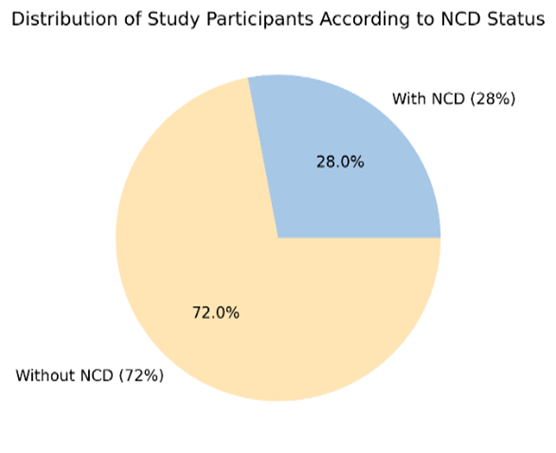
Fig. 1: NCD Status of Participants
110 individuals were approached and the response rate is 100%. The mean age of the participants was 39.8 ± 13.2 years (range: 18–72 years). Females constituted 56.4% (62/110) of the study population, while males accounted for 43.6% (48/110). The largest proportion of participants (37.3%, 41/110) belonged to the 31–45-year age group. Regarding educational status, the largest proportion were undergraduates (27.3%), followed by those who had completed secondary schooling (21.8%) and intermediate education (20.0%). Homemakers (32.3%) and employed individuals (36.9%) formed the major occupational groups.
| Awareness item | Yes n (%) | No n (%) |
|---|---|---|
| Millets are nutritious cereals | 84 (76.4) | 26 (23.6) |
| Millets help in diabetes management | 80 (72.7) | 30 (27.3) |
| Millets have higher fibre than rice | 77 (70.0) | 33 (30.0) |
| Millets help in weight management | 72 (65.5) | 38 (34.5) |
| Millets help in blood pressure control | 63 (57.3) | 47 (42.7) |
| Millets lower cholesterol | 61 (55.5) | 49 (44.5) |
Table 1: Participants awareness regarding health benefits of millets (n = 110)
| Knowledge level | Frequency(n) | Percentage(%) |
|---|---|---|
| Good | 57 | 51.9 |
| Moderate | 40 | 36.2 |
| Poor | 13 | 11.9 |
| Total | 110 | 100.0 |
Table 2: Participants knowledge regarding role of millets in NCD prevention (n = 110)
| Barrier | Yes n (%) | No n (%) |
|---|---|---|
| Do you find cooking millets takes too long or is complicated? | 62 (56.4) | 48 (43.6) |
| Do you lack knowledge or recipes to cook millets? | 57 (51.8) | 53 (48.2) |
|
Do cultural or habitual food preferences (e.g., always eating rice) prevent you from eating millets? |
59 (53.6) | 51 (46.4) |
| Do you find millets expensive compared to rice or wheat? | 55 (50.0) | 55 (50.0) |
| Do you find millets difficult to obtain in your local market? | 46(41.8) | 64 (58.2) |
| Do family members dislike the taste or texture of millets? | 49 (44.5) | 61 (55.5) |
Table 3: Perceived barriers to millet consumption (n = 260)
| Attitude item | Yes n (%) | No n (%) |
|---|---|---|
| Do you think millets are good for health? | 110 (100.0) | 0 (0.0) |
| Do you like the taste of millet-based foods? | 39 (35.5) | 71 (64.5) |
| Would you be willing to include millets in your regular diet? | 88 (80.0) | 22 (20.0) |
Table 4: Attitudes Toward Millet Consumption (n = 110)
Values are presented as frequency(n) and percentage (%). Percentages are calculated based on the total sample (N=110).
According to the Modified BG Prasad socioeconomic classification, the majority of participants belonged to Class III (middle class) (36.9%), followed by Class IV (lower middle class) (23.8%) and Class II (upper middle class) (20.8%). Participants from Class I (upper class) and Class V (lower class) constituted 7.7% and 10.8% of the study population, respectively.
Of the 110 participants, 31 (28.2%) reported being on treatment for one or more non-communicable diseases (NCDs), while 79 (71.8%) reported not being on treatment for any NCD.
DISCUSSION
The present study demonstrates high awareness regarding millets and their health benefits among urban adults in Hyderabad. 84 of 110 participants (76.4%) knew that millets are “nutritious cereals,” 80 (72.7%) knew they help in diabetes management, 77 (70.0%) knew they are higher in fibre than rice, and 72 (65.5%) knew they aid weight management. However, fewer recognized specific benefits: 63 (57.3%) knew millets can help control blood pressure and only 61 (55.5%) believed they lower cholesterol. Overall, our composite knowledge score was “excellent” for 51.8% of participants and “moderate” for 36.4%, indicating substantial knowledge of millets’ health roles. This aligns with recent national promotional initiatives[10]. However, despite good knowledge, regular consumption remains limited due to practical and cultural barriers.
Despite this awareness, positive attitudes did not fully translate into habitual intake. In our study all 110 (100.0%) participants agreed that “millets are good for health,” yet only 39 (35.5%) liked the taste of millet foods, and 88 (80.0%) said they were willing to include millets regularly.
Similar studies conducted in urban India have reported comparable gaps between awareness and actual consumption[14]. Cultural preference for rice and wheat remains deeply rooted in dietary practices[14]. Lack of familiarity with millet-based recipes and perceived cooking difficulty were major barriers in this study, consistent with findings from community-based studies on millet consumption practices[15].
Scientific evidence strongly supports the role of millets in improving glycaemic control, regulating lipid metabolism, and promoting cardiovascular health through their high dietary fibre content, low glycaemic index, and abundance of bioactive compounds such as polyphenols and antioxidants[6, 16]. Despite these well-established health benefits, the incorporation of millets into daily diets remains limited due to barriers such as inadequate consumer awareness, restricted availability of convenient millet-based products, and perceptions regarding taste, texture, and preparation time. Therefore, enhancing the practical accessibility of millet-based foods through product innovation, improving their culinary acceptance by developing appealing recipes and ready-to-eat options, and increasing public awareness through nutrition education are essential strategies to encourage regular millet consumption and maximize their potential in preventing and managing lifestyle-related chronic diseases.
Given that over one-fourth of participants reported having NCDs. In line with the findings of Bhattacharya (2023), promoting millet-based dietary patterns may contribute to the prevention and management of non-communicable diseases (NCDs) and support the objectives of national NCD control initiatives[17].
Limitations
The cross-sectional design precludes causal inferences between awareness and millet consumption. Information on NCD status and dietary practices was self-reported and may be subject to recall and social desirability bias. The study was conducted in a single urban field practice area, limiting the generalizability of the findings to other populations. Actual dietary intake and frequency of millet consumption were not objectively measured, and biochemical markers were not assessed.
Recommendations
Community-based nutrition education should emphasize practical cooking demonstrations and affordable millet recipes. Integration of millet-based meals into public nutrition programmes, workplaces, schools, and hospitals may improve acceptance. Policymakers should enhance availability and affordability of processed and ready-to-cook millet products while supporting local production. Future multicentric longitudinal and interventional studies are recommended to evaluate changes in dietary behaviour and the impact of regular millet consumption on clinical outcomes among individuals at risk of or living with NCDs.
CONCLUSION
The present study demonstrated that urban adults had generally high awareness of the nutritional and health benefits of millets, with over half exhibiting good knowledge regarding their role in the prevention and control of non-communicable diseases (NCDs). Despite this favourable awareness and a positive perception of millets as healthy foods, regular consumption was constrained by practical barriers, including perceived cooking difficulty, limited culinary knowledge, entrenched dietary preferences for refined cereals, concerns regarding cost, and family acceptance. These findings highlight a persistent gap between awareness and dietary practice.
Given that more than one-quarter of participants reported living with an NCD, improving the accessibility, affordability, and acceptability of millet-based foods should be considered a public health priority. Community-based nutrition education, practical cooking demonstrations, development of convenient millet-based products, and supportive food policies may help translate awareness into sustained dietary behaviour. These findings are consistent with current evidence suggesting that integrating millets into routine diets could contribute to healthier dietary patterns and support broader strategies for NCD prevention, while acknowledging that further longitudinal and interventional studies are needed to establish long-term health outcomes.
References
1. Bennett JE, Stevens GA, Mathers CD, Bonita R, Rehm J, Kruk ME, et al. NCD Countdown 2030: worldwide trends in non-communicable disease mortality and progress towards Sustainable Development Goal target 3.4. The Lancet. 2018; 392 (10152). Available from: https://doi.org/10.1016/s0140-6736(18)31992-5
2. Bramhankar M, Dhar M. Morbidity transition at the national and sub-national level and their determinants over the past and contemporary period in India. PLOS ONE. 2024; 19 (6). Available from: https://doi.org/10.1371/journal.pone.0304492
3. Shrivastava U, Misra A, Mohan V, Unnikrishnan R, Bachani D. Obesity, Diabetes and Cardiovascular Diseases in India: Public Health Challenges. Current Diabetes Reviews. 2016; 13 (1). Available from: https://doi.org/10.2174/1573399812666160805153328
4. International Institute for Population Sciences (IIPS) and Ministry of Health and Family Welfare (MoHFW). National Family Health Survey (NFHS-6), 2023–24: India Fact Sheetc. Mumbai: IIPS; 2026. (Last accessed on 27/7/2026)
5. John DA, Babu GR. What is the Modern Human Eating? Dietary Transition of the Age-Old to the Modern Man of India. Public Health Reviews. 2022; 43 Available from: https://doi.org/10.3389/phrs.2022.1604058
6. Mukherjee B, Jha RK, Sattar A, Dutta S, Bhattacharya U, Samanta S, et al. Harnessing the potential of millets for climate-resilient and sustainable agriculture. Frontiers in Plant Science. 2025; 16 Available from: https://doi.org/10.3389/fpls.2025.1574699
7. Sharma S. Nutritional Benefits of Millets—Impact on Lifestyle Disorders. Millets: A Sustainable And Nutritious Crop. 2026; Available from: https://doi.org/10.1007/978-3-032-16300-4_2
8. Grover R, Khutan H, Jain A, Arora H, Kushwaha G, Goyal N. Impact of Adding a Millet Diet on Glycemic Control and Lipid Profile in Patients with Type 2 Diabetes Mellitus. Annals of African Medicine. 2026; 25 (1). Available from: https://doi.org/10.4103/aam.aam_69_25
9. Mohod NB, Ashoka P, Borah A, Goswami P, Koshariya AK, Sahoo S, et al. The International Year of Millet 2023: A Global Initiative for Sustainable Food Security and Nutrition. International Journal of Plant & Soil Science. 2023; 35 (19). Available from: https://doi.org/10.9734/ijpss/2023/v35i193659
10. Singh S, Vemireddy V. Transitioning diets: a mixed methods study on factors affecting inclusion of millets in the urban population. BMC Public Health. 2023; 23 (1). Available from: https://doi.org/10.1186/s12889-023-16872-5
11. Ansari KH, Muniyoor K, Routroy S. Determinants of food consumption: the case of pearl millet in India’s dietary transition. Agriculture & Food Security. 2025; 14 (1). Available from: https://doi.org/10.1186/s40066-025-00553-0
12. Prasanthi K, Sireesha G. Individuals’ knowledge, attitude and practices on millets. International Journal of Food and Nutritional Sciences. 2022; 11 Available from: https://doi.org/10.54876/ijfans_64-21
13. Noncommunicable diseases. 25 September 2025; Available from: https://www.who.int/news-room/fact-sheets/detail/noncommunicable-diseases
14. Negi N, Sahu GK. Understanding Millet Consumption in India: A Comprehensive Review of Consumption Patterns, Influencing Factors and Consumer Preferences. MPJSS.:151.
15. Giri PP, Ravichandran M, Parida SP, Behera BK, Subba SH. India’s millet consumption conundrum: A snapshot from the urban slums of eastern Odisha. Journal of Family Medicine and Primary Care. 2025; 14 (3). Available from: https://doi.org/10.4103/jfmpc.jfmpc_1310_24
16. Naik NS, Nadiger N, Mukhopadhyay A. Effects of millet consumption on metabolic homeostasis (glycemic control and lipid profiles) in adults: A systematic review. Diabetes & Metabolic Syndrome: Clinical Research & Reviews. 2026; 20 (1). Available from: https://doi.org/10.1016/j.dsx.2025.103359
17. Bhattacharya S. Cultivating health: millets' potential in combating non-communicable diseases and future research avenues in India. Frontiers in Nutrition. 2023; 10 Available from: https://doi.org/10.3389/fnut.2023.1190111
Copyright
©2026 Mallannagari, et al. This is an open-access journal, and articles are distributed under the terms of the Creative Commons Attribution License CC-BY 4.0. (https://creativecommons.org/licenses/by/4.0/) which permits unrestricted use, distribution, and reproduction in any medium, provided the original authors and source are credited.
Cite this article
Mallannagari S, Rajitha A, Bujagowni V, Bai T, Lavudi SC. Awareness, Attitudes, and Barriers toward Millet Consumption and Its Role inPrevention and Control of Noncommunicable Diseases among Urban Adults in Hyderabad, India. Perspectives in Medical Research 2026; 14(2):20-26 DOI:10.47799/pimr.1402.26.10